 Period Calculator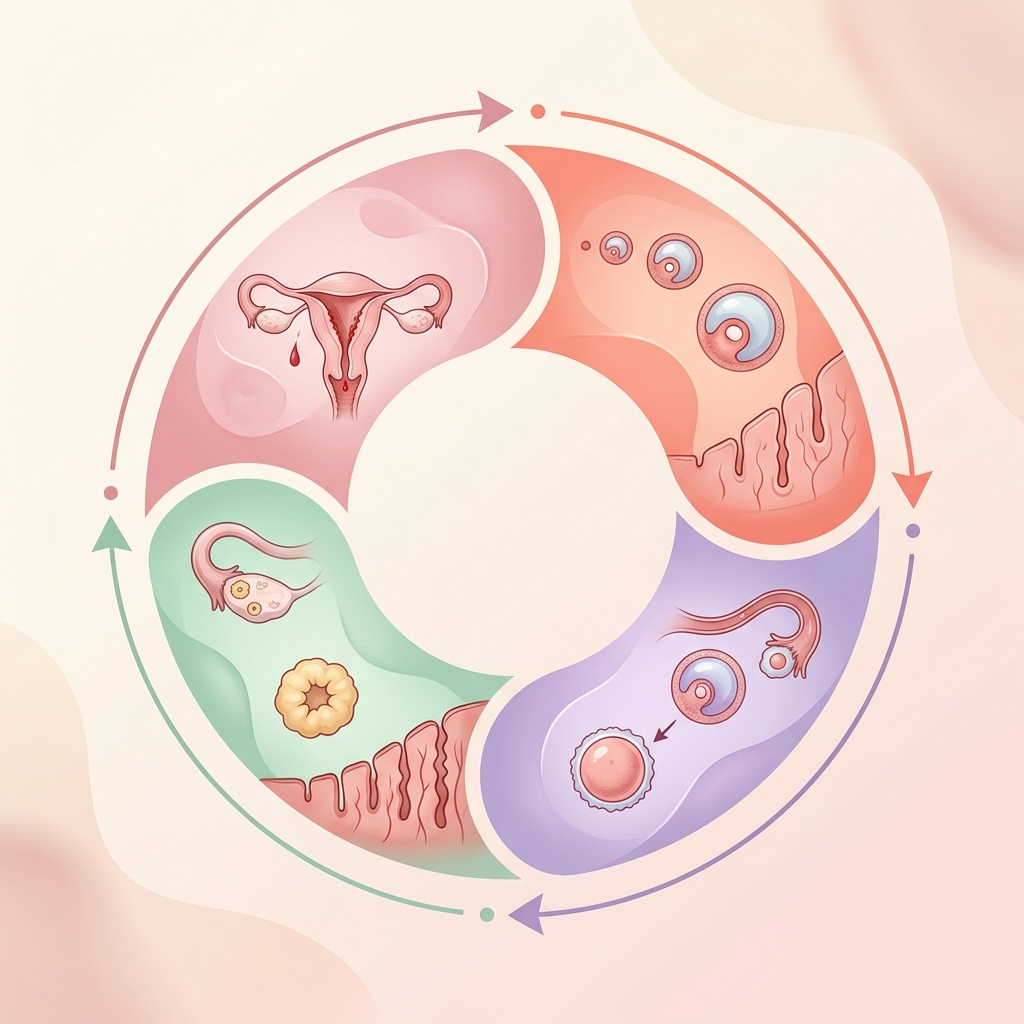
Most of us learned about periods in a single health class and were told "your uterus sheds its lining once a month." That's true, but it's a little like describing a symphony as "instruments making sound." The menstrual cycle is one of the most sophisticated biological processes in the human body — and it has four distinct, deeply different phases, each driven by unique hormonal patterns that affect far more than just your reproductive tract.
🔍 The Four Phases at a Glance
- Phase 1 — Menstrual: Days 1–5, period bleeding, lowest hormones
- Phase 2 — Follicular: Days 1–13, estrogen rises, energy builds
- Phase 3 — Ovulation: Day ~14, LH surge, egg released, peak fertility
- Phase 4 — Luteal: Days 15–28, progesterone peaks, PMS may appear
The Role of Hormones
Before diving into each phase, here are the four key hormones involved and what they do:
Phase 1: Menstrual Phase
🔴 Your Period
This phase begins on Day 1 — the first day of visible menstrual bleeding. The uterine lining (endometrium) that built up over the previous cycle sheds along with blood through the vagina. Estrogen and progesterone are at their lowest, which is why many women feel emotionally vulnerable and physically fatigued during menstruation.
- Prostaglandins cause uterine contractions (cramps)
- Normal flow: 30–80ml total blood loss per cycle
- Energy is lowest; rest and gentle movement are best
- Iron-rich foods (spinach, lentils, red meat) support replenishment
Phase 2: Follicular Phase
🌸 Growth and Rising Energy
Simultaneously with your period, FSH rises and stimulates 5–20 follicles in the ovaries to begin developing. Each follicle contains an egg. Over 10–14 days, one dominant follicle emerges and produces increasing estrogen. This rising estrogen thickens the uterine lining and produces progressively better mood, clearer skin, higher energy, and increased motivation and sociability.
- Estrogen improves brain function — optimal time for learning and problem-solving
- Libido gradually increases as ovulation approaches
- Cervical mucus shifts from dry/sticky to creamy
- Good time for high-intensity exercise as recovery is faster
Phase 3: Ovulation
🥚 Peak Fertility Day
When estrogen peaks, the hypothalamus signals the pituitary gland to release a surge of LH (luteinizing hormone). This LH surge — which OPK tests detect — causes the dominant follicle to rupture within 24–36 hours, releasing a mature egg into the fallopian tube. Cervical mucus becomes clear, profuse, and stretchy (like raw egg whites) to support sperm survival. Peak confidence, energy, and attractiveness often occur at this time — driven by biology.
- The egg survives only 12–24 hours after release
- Sperm can survive 3–5 days, creating a 6-day fertile window
- Some women experience mild one-sided pain (mittelschmerz)
- Light spotting at ovulation is normal
Phase 4: Luteal Phase
🌙 Progesterone Rises, PMS May Appear
After ovulation, the ruptured follicle becomes the corpus luteum, which produces progesterone. This hormone thickens and stabilizes the uterine lining in preparation for a potentially fertilized egg. If no pregnancy occurs, the corpus luteum degrades, progesterone drops sharply, and this hormonal withdrawal triggers PMS symptoms — bloating, breast tenderness, irritability, fatigue — before menstruation begins again.
- Basal body temperature rises 0.2–0.5°C after ovulation
- Metabolism slightly increases (100–300 extra calories burned per day)
- Cravings, especially for carbohydrates and sweets, are hormonally driven
- Sleep quality often worsens in the late luteal phase
The luteal phase is the most consistent phase of your cycle — it almost always lasts 12–14 days. This means that if you want to count back to estimate your ovulation date, you count back 14 days from your expected next period — regardless of your total cycle length.
Track All 4 Phases of Your Cycle
Use our free Period and Fertility tools to map exactly where you are in your cycle — and what to expect next.
Explore Our Cycle Tools →How Your Cycle Affects Your Whole Body
Your menstrual cycle doesn't just affect your reproductive system — it impacts your brain, skin, joints, immune system, and gut. In the follicular phase, estrogen improves pain tolerance and joint flexibility — great for athletic performance. In the luteal phase, progesterone can increase gut transit time, contributing to bloating and constipation. The immune system dips slightly at ovulation (believed to improve implantation chances) and strengthens in the luteal phase. Knowing which phase you're in transforms random symptoms into predictable patterns you can work with rather than against.